


 By Steve “The Doctor” Meek | Talk To Th3 Doc Podcast | The Fulcrum Group, Inc.
🎙️ Doctor’s Diagnosis: A Podcast Doc-umentary: Episode 103
David Russell, hiring strategist and creator of Hire The Best, joined me to explain why 82% of hiring decisions fail—and what DFW executives can do differently to build teams that stick. I sat down afterwards to think about my lessons learned.
Let me ask you something: when was the last time you made a hire based on your gut—and lived to regret it?
In Episode 103 of Talk To Th3 Doc, I sat down with David Russell, a guy who’s seen the good, the bad, and the “what-were-you-thinking” of hiring decisions. He’s worked with everyone from fast-growing tech firms to overwhelmed SMB owners, and his take is clear: gut-feel hiring is costing us more than we think.
And for those of us in leadership roles, it’s on us to fix it.
💸 The Real Cost of a Bad Hire
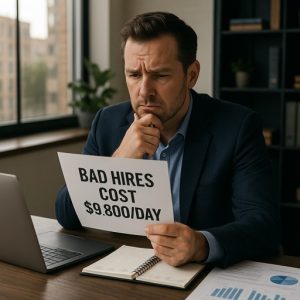
According to a Harvard Business Review study, the average bad hire sets a company back $9,800 per day. That’s not a typo. Nearly ten grand daily in lost productivity, miscommunication, culture breakdown, and—my personal favorite—hours of meetings trying to “coach them up.”
David didn’t sugarcoat it: “Hiring based on vibe instead of facts? That’s like picking an IT vendor because you liked their polo shirt.”
Now, I’ve been in the DFW managed IT space for over 20 years, and I’ll tell you this—bad hiring decisions ripple through a company just like bad IT: quietly, constantly, and expensively. They clog up your operations, drag down morale, and stall your growth. Sound familiar?
🧠 Facts Over Feelings: Why Process Wins
What I appreciated most in our conversation was David’s simple framework for smart hiring: Attract. Assess. Add.
- Attract people who match your company’s culture and mission. You’ve got to know what you stand for first.
- Assess with tools like DISC profiles, real-world "scrimmages," and structured interviews—not just resumes and charm.
- Add new hires only after their role, team expectations, and onboarding are fully mapped out.
This resonated deeply with some of our own internal practices. We
- use extended DISC to understand candidate’s profiles,
- have a mixture of standard operational, technical and personality questions to ask,
- I as CEO invest 90 minutes to go through core values with each new hire,
- create Strategic Plans, a mixture of Job Description plus related details,
- conduction monthly one-on-ones that align to quarterly planning and
- strive for a positive employee experience.
Translation, we are really in the people business
🔁 Tech Parallels: The Hidden Cost of Shortcut Thinking
David and I got to talking about how many businesses approach hiring like they approach IT—last minute, budget-blind, and without a clear roadmap. Sound familiar?
We’ve walked into plenty of new client environments where “the last guy” set up the server room like a game of Lawn Darts, things just stuck where they first landed.
Your hiring process shouldn’t look like that either.
Much like our SPOT Managed IT Services, a great hiring system prevents fires instead of constantly putting them out. It’s strategic, not reactive. It’s repeatable, not one-off. And it builds long-term value—whether we’re talking about your people or your platforms.
📉 The Leadership Blind Spot: Not Delegating, But Disengaging
Here’s where I challenged myself—and maybe you should too. We tend to delegate hiring as we grow. That’s natural. But many execs do it without staying engaged. The result? Decisions get made without the strategy lens only leaders bring.
You are the subject matter expert on your business. Your HR partner, outsourced recruiter, or consultant may know hiring—but they don’t know your company like you do.
If you’ve ever hired someone who looked great on paper but tanked your team’s momentum, this podcast episode was made for you.
🧭 So, What Should You Do Next?
David had some great takeaways:
- Do weekly one-on-ones instead of just annual reviews. Engagement beats evaluation.
- Define success before posting a role. Don’t just dust off the last job description.
- Use structured scorecards. Don’t let “they seem nice” be your hiring strategy.
I’ll add this: just like in IT, what gets measured gets managed. If your turnover is high, morale is low, or growth is stalling—don’t just look at tools or tech. Look at your people process.
🧑⚕️ Your Prescription from the Doctor
If your tech stack is solid but your team isn’t, you’re still going to hit a wall.
At Fulcrum, we’ve learned (the hard way) that great hiring and great IT have this in common:
👉 Both are rooted in clarity, planning, and proactive strategy.
Need help building both? That’s what we do.
✅ Let’s Talk About Your Tech—and Your Team
If this episode hit a nerve, let’s talk. We’re helping DFW businesses every day with:
- Managed IT services tailored to your team size and goals
- Cybersecurity and compliance strategies aligned with CIS v8 and HIPAA/PCI
- Long-term tech planning through our STARPower framework
📞 Request a free 30-minute strategy call
🎧 Or subscribe to Talk To Th3 Doc and never miss another insight like this one:
👉 www.fulcrumgroup.net/talk-to-th3-doc-podcast
Listen on your favorite platform:
🎧 Spotify
🍏 Apple Podcasts
🎙️ Amazon Music
💓 iHeartRadio
📱 Pocket Casts
▶️ Player FM
About the Author — Steve “The Doctor” Meek, CISSP
Steve “The Doctor” Meek is a DFW-based IT strategist, cybersecurity leader, podcast host, and co-founder of a 24-year technology legacy in North Texas. A recipient of the 2024 MSP Titan of Industry Award for Community Impact, Steve brings decades of experience helping CEOs, city managers, and healthcare and manufacturing leaders navigate cybersecurity, AI readiness, and operational resilience. As host of Talk To Th3 Doc, he explores leadership and ownership topics to find practical insights for SMB decision-makers.
Founded in Keller, TX, The Fulcrum Group, Inc. delivers relationship-centered DFW Managed IT Services through its flagship SPOT Managed IT Services and SPOT Managed Security Services platforms. Using its proprietary STARPower™ Framework, Fulcrum helps businesses strengthen security, modernize operations, and plan technology with clarity and confidence. With a 100% Texas-based team and a “No IT Jerks” philosophy, Fulcrum has earned repeated national recognition on the MSP 501 and CRN Top 500, serving SMBs, local governments, and mission-driven organizations across North Texas.