

 By Steve “The Doctor” Meek | Talk To Th3 Doc Podcast | The Fulcrum Group, Inc.
Doctor’s Diagnosis: A Podcast Doc-umentary: Mike Saylor A Leader’s Guide for DFW Executives Episode 123
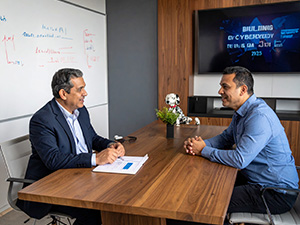
In Episode 123 of Talk To Th3 Doc, I sat down with Dr. Mike Saylor, who—while deeply rooted in cybersecurity—actually offered a broader message with even bigger implications for leaders: 👉 Internships and early-career programs are one of the most powerful strategic levers your organization isn’t using.
It reminded me of something Mark Twain once said: “The secret of getting ahead is getting started.” Well, in our organizations, we often try to “get ahead” by hiring perfectly polished professionals… while overlooking the talent we could grow ourselves.
Today’s article isn’t about cybersecurity. It’s about something deeper and more foundational: How building a healthy environment for internships reveals the health of your entire organization.
1. Internships Aren’t “Nice to Have” — They’re a Leadership Strategy
Dr. Saylor said something that stuck with me: Colleges are producing eager learners, but organizations aren’t ready to receive them. Why?
Because many workplaces today lack one or more of the following:
- A clear role definition and expectations
- Documented processes and values
- A culture that encourages questions
- Leaders who make time for coaching or have a process
- A structure for predictable work
- A healthy place for someone new to land
If that list looks suspiciously like a “strong company culture” checklist… it is. You can tell a lot about an organization by whether or not they can support an intern. An internship-ready environment is a healthy environment.
2. Documentation: The Secret Ingredient Most Leaders Avoid
Internships expose where leaders rely on tribal knowledge instead of process.
If your team says things like:
- “Just ask Jim how to do it…”
- “It’s all in my notebook somewhere…”
- “We’ve always done it this way…”
- “I don’t have time right now…”
Then an intern will struggle — and honestly, so will new hires.
At The Fulcrum Group, we learned years ago that sustained success comes from:
✔ Writing checklists down
✔ Creating standard operating procedures
✔ Rough-draft instructions junior engineer can use for tougher situations
✔ Screenshots + short videos can be consumed easier
✔ Automation of repetitive steps with tools
We embrace ITIL and it supports our STARpower framework, but the core principle is simple: Document it once. Teach it forever. Improve, if possible.
3. Culture Determines Whether Internships Succeed or Fail
You cannot fake culture with interns. They see and ask everything:
- How your team fields “basic” questions
- Whether senior employees are patient
- Whether mistakes are punished or coached
- Whether operations, sales, HR, IT and leadership collaborate
- Whether your organization actually lives its stated values
Fulcrum’s “No IT Jerks” philosophy came from this reality. If you want people to grow, you need an environment where:
- People feel safe asking questions
- Leaders enjoy teaching
- Colleagues collaborate rather than compete
- Curiosity is encouraged
- Feedback is kind, direct, and useful
Interns flourish where humility and patience live. We were proud to partner with the US Department of Labor for our certified apprenticeship program. And even more locally with the Workforce Solutions of Tarrant County on several interns. It is nice to have a periodic influx of younger people to “test” your current culture.
4. Training Isn’t a Program — It’s a Muscle
Dr. Saylor and I discussed how “hands-on practice” matters far more than theoretical knowledge. Internships are not cheap labor but rather a training lab. But the leadership challenge is if training only happens when the intern arrives… the intern won’t succeed.
Your team has to be trained first.
Teams need:
- Managers who know how to teach
- Defined outcomes for the intern
- Daily and/or Weekly rhythms for check-ins
- A “practice safe learning” environment
- Processes designed to make mistakes recoverable
At Fulcrum, we use our core value of “Plan → Do → Review” loop as our training backbone.
Even senior team members are learning constantly — which means interns plug into a system, not chaos. Whether it is training during weekly departmental meetings, technical training like our internal AI Council, specialty training like supplemental cybersecurity topics at monthly all-hands meetings or simply attending a training class, ongoing education is important at Fulcrum.
The only thing worse than training up an individual and them leaving, is not training people and them staying.
5. Internships Make Future Hiring Easier (and Stronger)
- Finding great people is hard.
- Everyone is fishing in the same pond.
- Everyone is chasing the same people.
- Even great people need to learn your company way to be successful.
- Everyone wants “three years of experience” from people who graduated yesterday.
But Internships flip the equation:
💡 Instead of competing for great people…
you can develop great people.
💡 Instead of hoping a candidate will fit your culture…
you can grow people inside your culture that are more dedicated to the company, for you giving them a chance.
💡 Instead of spending 3–6 months onboarding…
your intern becomes day-one ready if they return as a hire.
We see this firsthand at Fulcrum. When interns return as employees, their onboarding time drops by 50–70%. Their cultural fit is more guaranteed. And as you may have heard on a prior podcast, we need to hire more for coachability. And they already understand our values, tools, and clients. This isn’t just smart HR It is smart business.
6. Internships Reveal Your Leadership Maturity
A functioning internship program is a sign your organization has:
✔ Clear expectations
✔ A healthy culture
✔ Documented processes
✔ A predictable workflow
✔ A teachable leadership team
✔ A growth mindset
If an organization cannot support interns… it usually means something deeper isn’t working. Internships can act like an X-ray for organizational health.
7. And Yes… Internships Build Cyber Awareness Too (The One Cyber Point)
Even though this article isn’t about cybersecurity, I’ll share the one cyber insight Dr. Saylor stressed: Every cyber intern you bring in raises your organization’s future cyber maturity. Because they:
- Ask “why do we do it this way?”
- Find weak processes when they questions clarity
- Stumble on surface gaps
- Bring fresh training questions and ideas
- Reinforce security habits
- Reduce dependency on individual employees
- Create bandwidth to fix the “important but not urgent” tasks
Cybersecurity is ultimately a product of good processes, to supplement people, tools and services. And internships accelerate the strengthening of those processes.
Key Takeaways / FAQ
If your organization wants to strengthen its talent pipeline, culture, and operational maturity, internships are one of the most powerful (and underused) tools you have. They force a company to:
1. Clarify roles and expectations
If no one can explain what success looks like to an intern, then chances are no one can explain it to a new hire either.
2. Improve processes and documentation
Internships expose tribal knowledge and accelerate the creation of SOPs, checklists, and repeatable workflows.
3. Strengthen culture through coaching and collaboration
Healthy environments make space for questions, curiosity, and shared learning. Interns thrive there — and so do employees.
4. Build leadership muscles
Mentorship turns managers into teachers and transforms “busy teams” into “learning teams.”
5. Reduce long-term hiring friction
Interns who become full-time team members onboard faster, fit culturally, and already understand your tools, rhythms, and values.
6. Support long-term cybersecurity maturity
Even though this isn’t a cybersecurity article, stronger processes, training habits, and systems all reduce hidden risks — and interns help strengthen them.
The Bottom Line:
If you want a healthier team…
If you want to improve training…
If you want culture to become a competitive advantage…
If you want better hiring outcomes…
If you want stronger operations…
If you want to reduce blind spots…
Build an internship program.
It forces your organization to become what it always needed to be.
And if you want help building the systems, processes, and leadership rhythms that make that possible — well, that’s what we do every day at The Fulcrum Group.
7. Call to Action
If this conversation sparked questions about your own cybersecurity readiness, talent challenges, or strategic roadmap, I’d love to help you take the next step.
You can watch or listen to the full episode here:
📺 YouTube: https://youtu.be/btYf6IVdDK4
🎧 All Platforms: https://pod.link/1807560282
Or schedule a strategy conversation with our team:
👉 Click the link to the side to schedule
About the Author — Steve “The Doctor” Meek, CISSP
Steve “The Doctor” Meek is a DFW-based IT strategist, cybersecurity leader, podcast host, and co-founder of a 24-year technology legacy in North Texas. A recipient of the 2024 MSP Titan of Industry Award for Community Impact, Steve brings decades of experience helping CEOs, city managers, and healthcare and manufacturing leaders navigate cybersecurity, AI readiness, and operational resilience. As host of Talk To Th3 Doc, he explores leadership and ownership topics to find practical insights for SMB decision-makers.
Founded in Keller, TX, The Fulcrum Group, Inc. delivers relationship-centered DFW Managed IT Services through its flagship SPOT Managed IT Services and SPOT Managed Security Services platforms. Using its proprietary STARPower™ Framework, Fulcrum helps businesses strengthen security, modernize operations, and plan technology with clarity and confidence. With a 100% Texas-based team and a “No IT Jerks” philosophy, Fulcrum has earned repeated national recognition on the MSP 501 and CRN Top 500, serving SMBs, local governments, and mission-driven organizations across North Texas.