The Fulcrum Group Blog
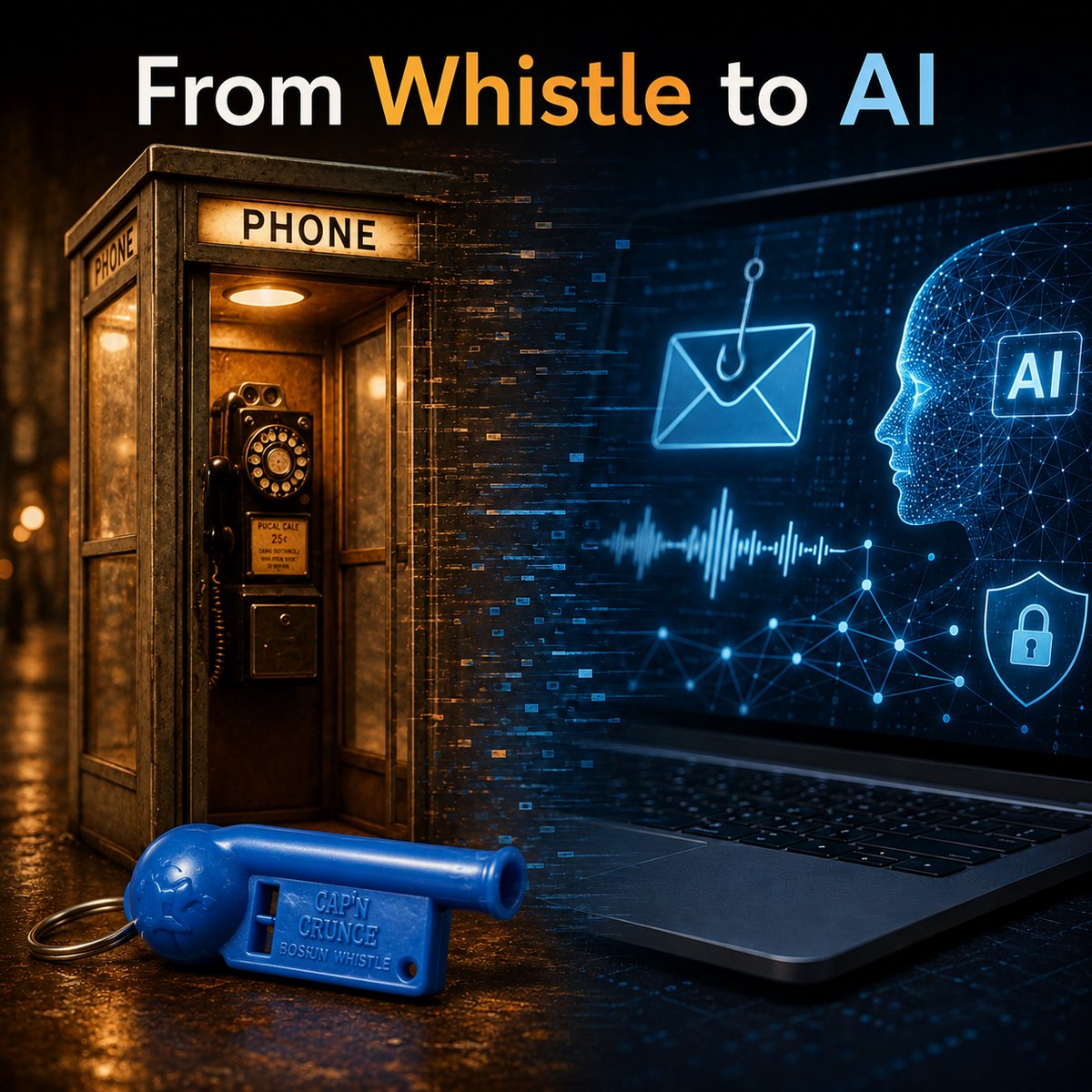
In the mid-1960s, boxes of Cap’n Crunch cereal came with a toy whistle. Most kids blew it at the breakfast table for a week and forgot about it. A former Air Force electronics technician named John Draper didn’t. He and a loose community of hobbyists who called themselves phone phreaks discovered the whistle could produce a 2600Hz tone, which happened to be the exact frequency AT&T’s long-distance network used to signal that a line was open and ready for instructions. Blow the whistle into the receiver and the phone system handed you control of the call. Free long distance, courtesy of a cereal box.
Draper took the nickname Captain Crunch and built electronic devices called blue boxes that generated the tone on demand. After Esquire wrote about the practice in 1971, two college kids named Steve Wozniak and Steve Jobs tracked Draper down, learned the trick and started building and selling blue boxes themselves. Jobs later said he doubted there ever would have been an Apple Computer without blue boxing. So one of the most valuable companies in history traces part of its origin to hacking the phone system with a breakfast toy.
What the Phone Company Got Right
Here’s the part of the story most people skip past. AT&T didn’t respond by asking customers to please stop whistling. The vulnerability existed because the network sent its control signals down the same channel as the conversation itself. Anyone who could make the right sound could speak the network’s language. So over the following years, the phone companies redesigned the system to move signaling out of the voice channel entirely. Once the control path was separated from the talk path, the whistle and the blue box became museum pieces. Literally. You can see one of Wozniak’s handmade blue boxes at the Computer History Museum today.
That lesson has aged well. Attackers rarely break systems so much as they abuse whatever the system was designed to trust. And the durable fix usually isn’t trying harder within the old design. It’s changing the design.
Today’s Whistle Is AI
The whistle cost nothing beyond the price of the cereal. Today’s attacker tools aren’t much more expensive, and AI has taken the place of that 2600Hz tone. AI writing tools now produce phishing emails without the misspellings and awkward phrasing we all spent years training employees to spot. Voice cloning can imitate an owner or CFO from a few seconds of recorded audio, then call the office and ask accounting to move money. Deepfake video is starting to show up in fake vendor meetings. And attackers use AI to scan for exposed systems and unpatched software faster than any human crew ever managed.
The social engineering is only half of it. Attackers now point AI tools directly at the network itself. Automated agents probe firewalls, VPNs and remote access points around the clock, test stolen passwords against hundreds of login pages at once and chain together small weaknesses a human might never bother connecting. When a new software vulnerability gets published, AI helps attackers turn it into a working exploit in hours instead of weeks, which means the window between a patch being released and someone testing your network for the gap has nearly closed. Malware is learning the same trick, rewriting itself as it spreads so older security tools looking for known signatures never see a match.
The uncomfortable math is that the barrier toentry keeps dropping. When sophisticated attacks got cheap, smaller organizations across North Texas became worth an attacker’s time in a way they simply weren’t ten years ago. Around DFW we regularly meet 40-person companies dealing with attack techniques that used to be reserved for Fortune 500 targets.
None of this calls for panic. It calls for the same response the phone company made decades ago. Stop trusting the things attackers have learned to imitate.
Adjusting the Design, Not Just the Effort
For most of the organizations we work with, that means a handful of practical shifts rather than one big purchase. Train people that a polished, well-written email is no longer evidence of legitimacy, because the typos aren’t coming back. Put verification steps around money movement and credential changes that don’t depend on recognizing a voice or an email address. Assume some attacks will get through and have real detection and response sitting behind the front door. And align the whole program to an established framework like CIS Controls v8.1 so decisions follow a plan instead of the latest headline.
We’ve found the organizations that handle this well aren’t necessarily the ones spending the most. They’re the ones where leadership has honest visibility into their current posture and adjusts it intentionally, quarter by quarter, the same way they manage any other business risk. The phone company didn’t beat the phreakers overnight. It beat them by redesigning with intent.
How We Help DFW Organizations Stay Ahead
This is the work our SPOT Shield Managed Security Services were built for. We offer versions matched to how organizations actually operate. Some clients are small businesses without internal IT. Others are compliance-driven organizations like municipalities and healthcare groups, and some are internal IT teams that want co-managed security depth behind them. SPOT Shield MDR puts trained analysts on detection and response so a threat that slips past the perimeter gets caught and contained instead of quietly settling in. Our penetration testing goes looking for your version of the 2600Hz tone before someone else finds it.
For leadership teams that want strategic guidance and not just tools, our fractional CISO services bring security planning into the same rhythm as the rest of the business. Combined with the visibility our STARLight platform provides and the quarterly reviews built into how we work, security stops being a mystery line item and becomes something leadership can actually see and steer.
The Same Playbook, Sixty Years Later
The phone company survived the whistle because it paid attention, understood what attackers were exploiting and changed the system underneath them. Sixty years later the tools have changed from cereal box toys to AI, but the playbook for defenders is the same. If you’d like an honest look at what your organization is trusting that it probably shouldn’t be, we’re happy to have that conversation. We’re in Keller, we answer the phone and we promise not to explain a simple answer in fifteen minutes of jargon.