

 Spring is a busy season for organizations across North Texas. While April Fools Day pranks fade quickly, cybercriminal activity does not. Scams that blend into day-to-day work continue to increase, often targeting well-meaning employees who are moving fast and juggling multiple priorities. These threats are effective not because teams are careless, but because modern scams are designed to look normal.
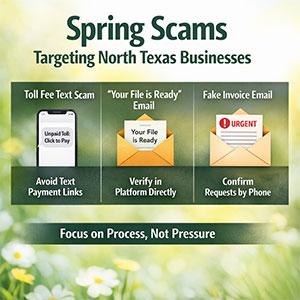
Scam 1: The Toll or Parking Fee Text
Employees receive texts claiming an unpaid toll or parking balance. The amount is small, the system name looks real and the timing feels believable. These scams have grown rapidly, with thousands of fake domains impersonating legitimate toll agencies. The small-dollar request lowers suspicion, and a quick click during a busy moment is all it takes.
The most reliable protection is process. Legitimate toll agencies do not require immediate payment through text messages. Organizations should establish a clear rule that employees never make payments through text links. If something appears legitimate, they should go directly to the official website or app and verify on their own.
Scam 2: The “Your File Is Ready” Email
This scam blends into daily workflow. An email appears to share a document through familiar platforms such as Google Drive, OneDrive or DocuSign. The format looks genuine. After clicking, employees are prompted to log in, and attackers capture their credentials. Once inside, attackers can access cloud systems that businesses depend on.
If a file was not expected, employees should avoid the email link and instead open the platform directly in their browser. If the file is legitimate, it will appear in the account. Organizations can further reduce risk by limiting external sharing permissions and enabling alerts for unusual login activity.
Scam 3: The Well‑Written Email
Older phishing emails were easy to spot because of poor grammar or formatting. Modern attacks use polished, professional messages that reference real company data collected online. These emails often target departments like HR, payroll or finance and request sensitive updates or payment changes. The messages feel routine, making them difficult to identify.
Any message requesting credentials, payment changes or sensitive information should be verified through a second communication channel such as a phone call or chat message. Employees should hover over sender addresses to confirm the real domain. When an email conveys urgency, that urgency should be treated as a warning sign.
The Real Issue: Process, Not People
These scams work because they rely on timing, familiarity and the assumption that people will act quickly. The real risk is not an individual making a rushed decision. It is a system that depends on perfect decision‑making under pressure. Strong processes and simple guardrails reduce that risk significantly.
Where We Can Help
Business owners do not want another project added to their workload. They simply want confidence that their organization is not exposed to avoidable risks. We offer straightforward conversations that help identify where vulnerabilities may exist in daily workflows and how to address them without slowing anyone down.
Call us at 817‑337‑0300 or Book your 10-minute discovery call here: https://www.fulcrumgroup.net/discoverycall/.
If this information would help another business owner or city leader you know, feel free to share it. Sometimes a quick reminder is all it takes to prevent a costly mistake.